Weather lore gives a small sign a large responsibility. A caterpillar’s band, a seed’s shape or a red horizon is asked to speak for the weather ahead. Some sayings grew around observations of the atmosphere; others make an appealing story from an animal or a plant. The first useful question is what kind of sign is being considered. The next is whether the evidence supports the job assigned to it.
Wikipedia’s weather-lore reference describes a body of informal folklore passed through speech and writing, often without instruments. That form is part of its appeal. A remembered saying is portable and easy to repeat. Its compactness also leaves little room for qualifications about location, prevailing winds or how a prediction is to be judged. A neat rhyme can travel farther than the conditions that gave it meaning.
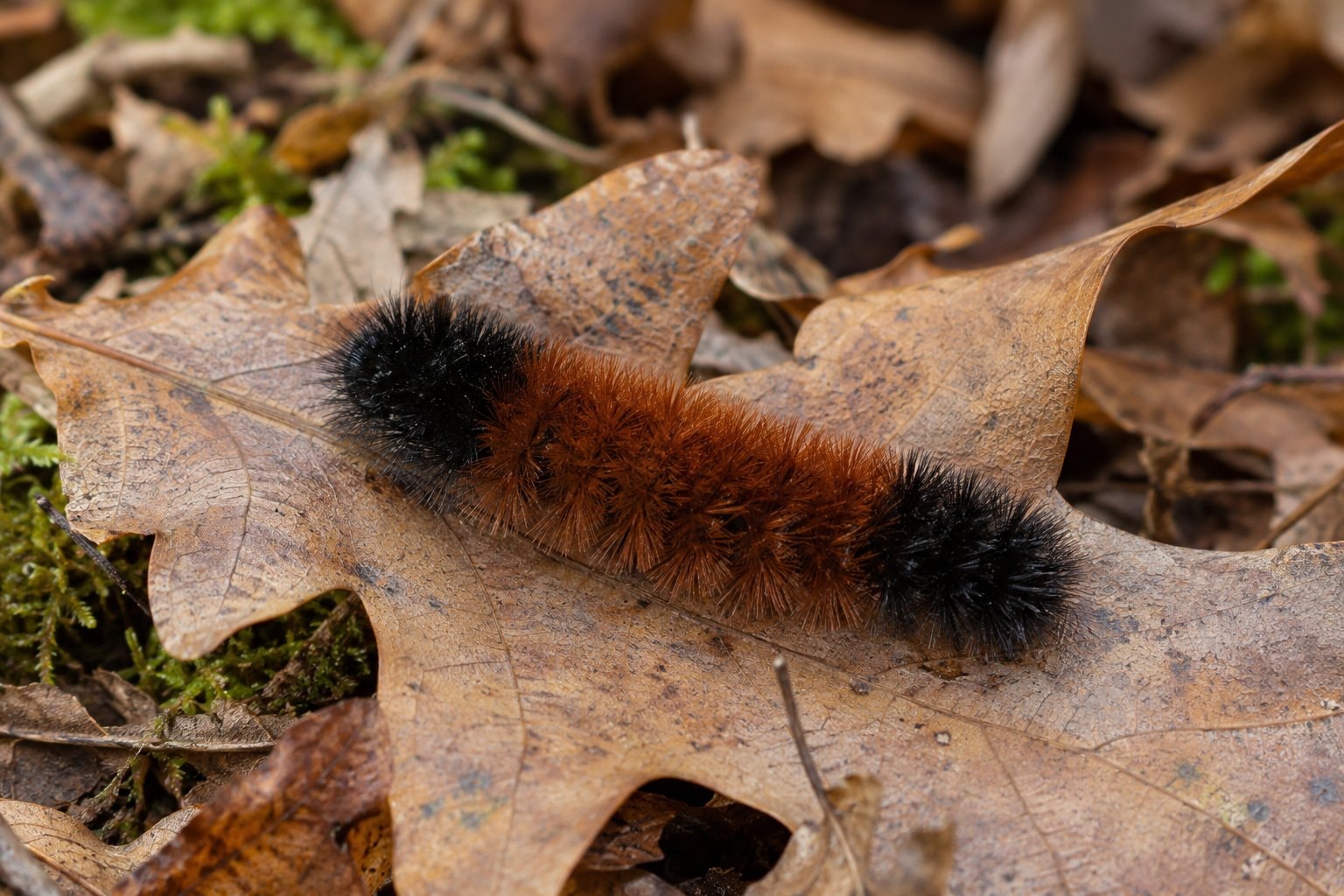
The woolly bear is a caterpillar
Wikipedia’s Isabella tiger moth reference describes the banded woolly bear as the larval form of a moth. It records a familiar belief that a broad brown band means a mild winter and a narrow band a severe one. The account also explains that banding varies among hatchlings and that the brown band tends to widen with age and molts. Those are reasons to be cautious about assigning the bands to a future winter.
The same reference reports no scientific evidence for the woolly bear as a winter predictor. Its seasonal life is interesting without that assignment: the larva overwinters and resumes its development in spring. A caterpillar is not a tiny weather office wearing a fur coat. The difference between its actual life history and the story attached to it is exactly the kind of distinction a nature almanac can keep visible.
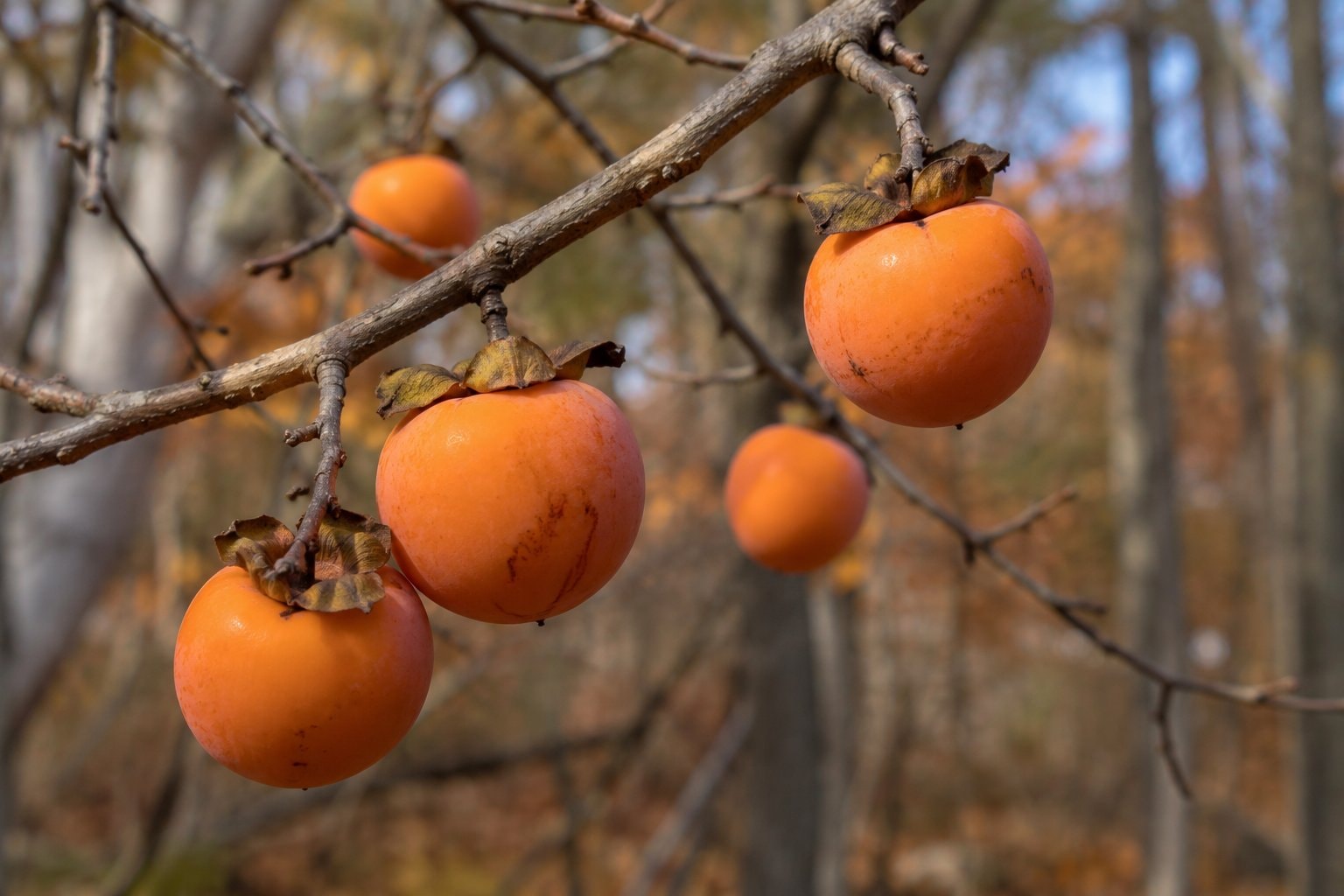
The cutlery inside a persimmon seed
UF/IFAS Extension’s persimmon-seed discussion records another winter tradition. A fork-shaped embryo is associated with a mild winter or light snow, a knife with cold winds and ice, and a spoon with heavy snow to shovel. These are the customary readings the article describes. They are not forecasts offered here, and they do not turn the seed into evidence about a particular coming winter.
The Extension article explicitly says there is no science or research behind the seed-reading practice. It also recounts informal comparisons, but informal success claims should not erase that limitation. A comparison needs an agreed definition of the result before it can establish reliability. Is a mild winter defined by temperature, snowfall, a short cold spell or a memory of how the season felt? The charm of the image does not answer those questions.
Wikipedia’s American-persimmon account identifies the tree and its fruit independently of the folklore. The fruit belongs to regional natural-history and kitchen reading; the prediction belongs to tradition. The sourdough feature’s persimmon note follows the fruit as a regional subject without asking it to announce a winter.
A shadow has a calendar story
Wikipedia’s Groundhog Day account describes the shadow-based tradition and the varied assessments of its forecasting record. It notes a basic difficulty: an early spring is not always clearly defined. Its discussion of research reports chance-level performance in a comparison of groundhog predictions with an observed spring indicator. The tradition is therefore better understood as a seasonal custom than a reliable forecast.
A ritual can remain familiar even when a prediction does poorly. That is a question about culture rather than atmospheric skill. The same caution applies to any animal sign used to announce the entire season. A natural observation is valuable for what it actually records. Asking it to predict more than the evidence supports makes the observation less clear, rather than more useful.
A red sky has a physical setting
The anonymous traditional proverb “Red sky at night, sailors' delight. Red sky at morning, sailors take warning.” is recorded by Wikipedia’s red-sky reference. Its explanation concerns scattering of sunlight, particles in the air and the direction from which weather systems usually move. Unlike a seed shape, a colored sky can be related to current atmospheric conditions. That does not make the saying universal.
The reference explains why prevailing wind patterns matter and why the rhyme does not apply equally at every latitude. It also notes that a storm may lose its rain before reaching the observer. A proverb compresses a conditional explanation into a memorable line. Reading the explanation is more useful than treating the line as an instruction that works everywhere.
A warm spell needs a description
Wikipedia’s Indian-summer reference describes the term as unseasonably warm, dry autumn weather in temperate Northern Hemisphere regions, often discussed as occurring after frost. The term describes an interval, not a guarantee that winter will be gentle. It also has an uncertain history. The ordinary observation can be stated plainly without giving the name power over what comes next.
Countryside folklore follows other beliefs attached to animals and natural appearances. The natural events calendar returns to documented seasonal timing, while frost flowers considers a cold-weather appearance with a physical explanation. Together, they allow a story to be enjoyed and an observation to remain an observation.