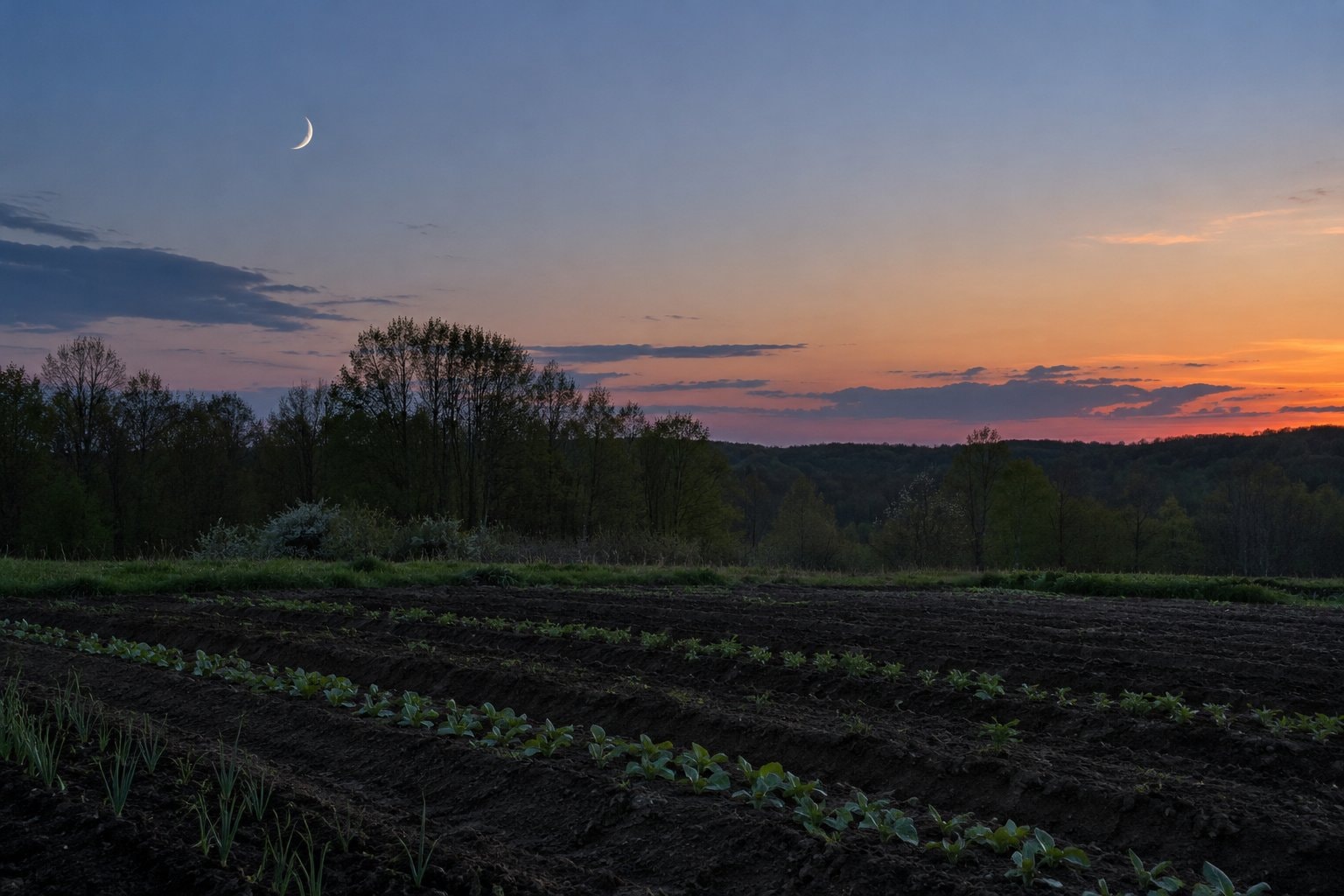
A garden year is easier to understand when its different clocks are kept separate. Winter cold affects the survival of perennial plants. Warmth, moisture and daylight shape the growing season. Insects have life stages, and a burrowing mammal has a diet that may have little to do with the plant above its tunnel. An almanac can bring these questions together without pretending that a single date settles them all.
What a hardiness zone tells a gardener
The USDA Plant Hardiness Zone Map is based on average annual extreme minimum winter temperatures. USDA describes it as a way to judge which perennial plants are most likely to thrive in a location. That is a specific kind of information: the cold end of the year. It is useful when considering whether a perennial may survive winter, but it is not a complete account of the conditions in a garden.
Wikipedia’s hardiness-zone reference describes limitations of the zone system, including differences in frost dates and snow cover. A zone label cannot describe every difference between a sheltered bed, an exposed site and another region with a similar winter minimum. Treat the label as a starting point for a particular question about cold tolerance. It does not replace attention to the rest of the growing conditions.
The growing-season reference describes the part of the year when rainfall, temperature and daylight permit plant growth, while noting that individual crops have different adaptations. Frost is another question again: its reference describes ice forming on a cold surface and the damage freezing can cause to plant tissue. A mild interval is not the same thing as a settled growing season, and an average description is not a forecast for a particular night.
Plan around the crop and the place
University of Illinois Extension’s vegetable-gardening material brings planning, soil, seed starting, planting, watering and pest management into the same practical subject. It distinguishes cool-season and warm-season crops rather than treating all vegetables as one task. That organization is useful for reading a garden year. Begin with what is being grown, then consider the conditions and the work that belongs to that crop.
The moon-gardening page considers a different calendar, one based on a traditional belief about lunar influence. Planting by the signs adds zodiac classifications to that belief. These customs are part of garden folklore. They should be read beside evidence about growing conditions, rather than substituted for it.
Bagworms are moth larvae
The evergreen-bagworm reference on Wikipedia describes a moth whose larva carries a case decorated with bits of the plant on which it feeds. Arborvitae and red cedar are favored hosts, although many other trees can be used. The case is an animal’s shelter, not a plant growth. Recognizing that difference is a useful first step in understanding what is happening to the foliage.
Wikipedia’s bacterium reference describes Bacillus thuringiensis, commonly shortened to Bt, as a soil-dwelling bacterium used in biological insecticides. Some strains produce proteins with insecticidal action, and the reference describes activity against particular insect groups, including moths and butterflies. The name does not mean that every strain affects every insect. Nor does a caterpillar insecticide distinguish a wanted butterfly larva simply because the gardener likes its adult form.
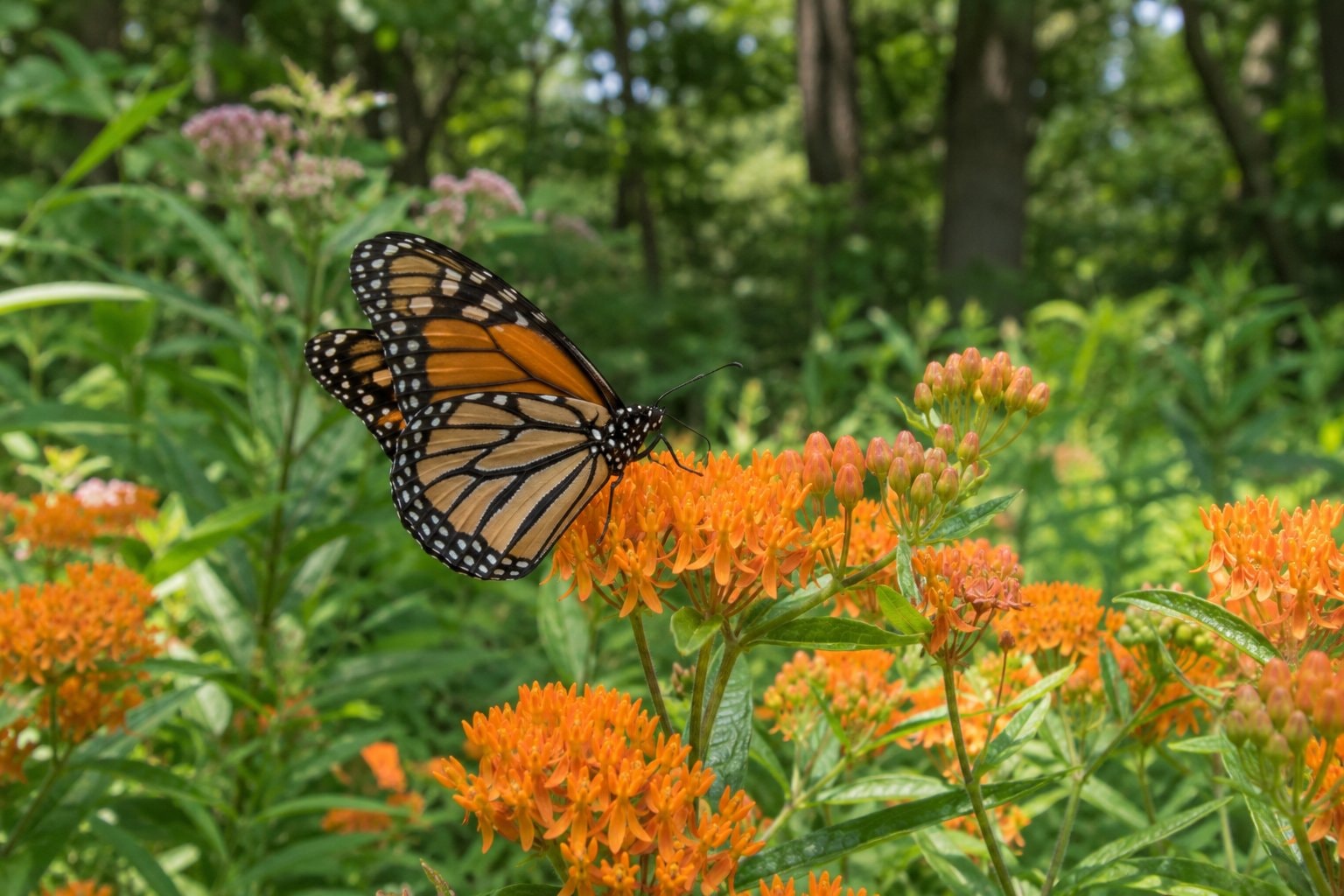
That connection belongs beside gardening for butterflies and moths. Adult visitors and their caterpillars are parts of the same life cycle. A garden’s desired wildlife and a garden’s pest concern may overlap in ways that a quick glance at a chewed leaf does not explain. Identification comes before a judgment about the whole situation.
Japanese beetles and lawn grubs
Wikipedia’s Japanese-beetle account distinguishes adults feeding on foliage from larvae feeding underground on roots. University of Illinois Extension’s lawn-grub guidance describes the white, curved grubs as beetle larvae and warns that browning can also result from drought, poor soil or disease. A brown patch alone does not identify the cause. Its explanation makes actual evidence of grubs important before a lawn problem is attributed to them.
In that Extension account, grub damage typically begins in mid-August and may continue into early October. The timing describes a documented pattern, not a reason to assume that every lawn follows it. The reference also notes that skunks and raccoons may disturb a lawn while searching for grubs even when grub numbers are low. A disturbance above ground and damage to grass roots are therefore different clues.
Wikipedia’s account of milky spore disease identifies a bacterium associated with disease in Japanese-beetle grubs. That is a biological relationship, not a brand recommendation or an explanation for every lawn problem. Grubs of different beetles and unrelated causes of browning should not be collapsed into the same diagnosis. The point is to understand which animal or process the evidence concerns.
A mole tunnel does not diagnose grubs
University of Illinois Extension’s discussion of mole diet explains that moles eat earthworms, grubs, beetles and other small animals, with earthworms especially important in spring and early summer. It says reducing grubs is unlikely to solve a mole problem because earthworms remain a major food. A tunnel cannot be treated as proof that a lawn has damaging numbers of grubs.
Extension’s separate account of mole hills also notes the useful roles of insects, worms and soil disturbance. Its articles discuss control options, including trapping, but the natural-history lesson here is to identify the animal and its food rather than prescribe interference with it. Wikipedia’s eastern-mole account describes broad digging paws and a life spent largely underground. A raised ridge can be read as evidence of that life. For another crop-and-wildlife connection, continue to gourds and purple martins.