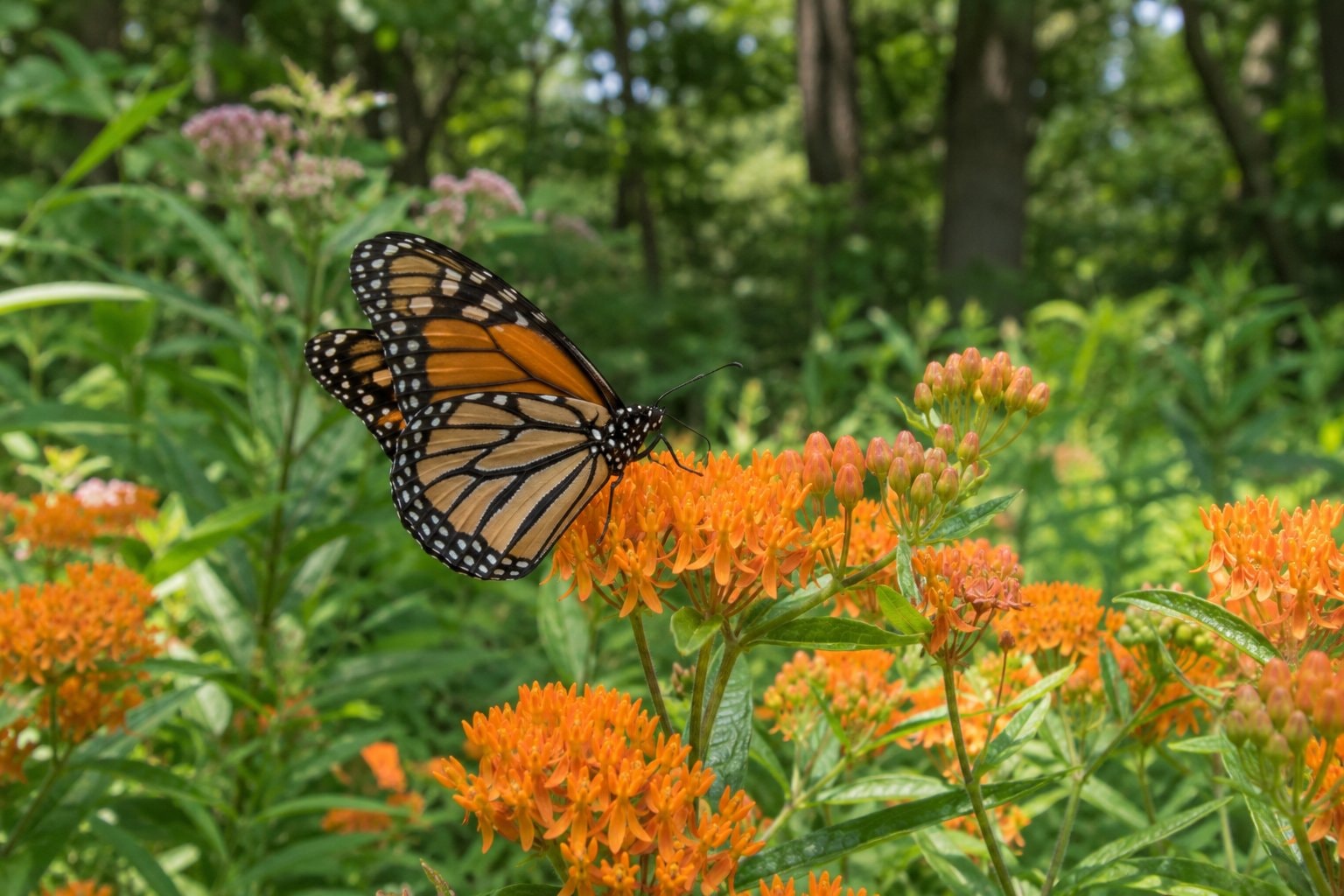
A butterfly garden needs more than a procession of attractive flowers. Adult butterflies and moths use nectar, while their caterpillars need suitable host plants to eat. A garden can be rich in flowers and still leave its visitors' young without food. The useful question is therefore not simply which blossom attracts a butterfly, but whether the planting supports its life beyond that brief visit.
Leaves are part of the plan
The U.S. Forest Service's pollinator gardening guidance explicitly calls for larval host plants. It explains that caterpillars will eat them and recommends placing those plants where leaf damage is tolerable. A chewed leaf in a host planting is not automatically a failed garden. It may be the visible evidence that the part intended for the young insects is being used.
The Forest Service recommends a variety of plants blooming from early spring into late fall, with clumps rather than isolated specimens. It also advises including plants native to the region, which are adapted to local conditions and pollinators. The aim is continuity and diversity, rather than a single spectacular flowering period. Flowers, foliage and the timing of each belong in the same plan.
The Xerces Society's regional native plant lists make that distinction practical. They highlight nectar and pollen plants alongside butterfly and moth host plants, and include a Midwest list. The society describes the lists as useful across rural and urban landscapes. Its categories show why a planting can support more than the conspicuous adult insects flying over it.
Orange flowers, different visitors
Wikipedia's account of butterfly weed, Asclepias tuberosa, describes a milkweed native to eastern and southwestern North America. Its bright flowers attract butterflies and produce abundant nectar. The article also notes that bees and wasps are the principal pollinators. A plant's familiar name describes only part of the community using it; the butterfly perched on a flower is not necessarily the insect doing most of its pollination.
The same account describes butterfly weed as a host for monarch and queen butterflies and several moths. It qualifies the monarch association: its rough foliage is not a preferred monarch host compared with other milkweeds. That is a useful caution against treating all plants in a familiar group as interchangeable. A nectar visit, an egg-laying choice and a successful larval food plant are different observations.
Butterfly weed favors sun and dry sand or gravel soils, according to the article. Its deep woody taproot makes it difficult to transplant after establishment. Match that description to a garden's actual setting rather than placing the plant wherever its orange flowers would look best. For the broader questions of frost, soil and seasonal planning, see the gardening year.
The garden continues after dark
The Forest Service reminds gardeners that night-blooming flowers support moths as well as other nighttime pollinators. A butterfly garden need not stop at the insects most easily noticed at midday. Moths bring a different set of visits, colors and life histories. The flowers seen at dusk and the caterpillars found on leaves can be parts of the same insect's story.
The tomato hornworm provides an especially clear example. Wikipedia's account of Manduca quinquemaculata identifies the larva as the tomato hornworm and the adult as the five-spotted hawkmoth, a member of the sphinx moth family. The larva is green with a dark projection at its rear. The adult is a brown and gray moth that takes nectar from flowers.
The account says the caterpillar uses tomatoes and other nightshade-family plants, while the adult feeds at flowers that often are large, white and fragrant. It also warns that a tomato leaf does not by itself distinguish the tomato hornworm from its similar relative, the tobacco hornworm. Identification depends on the insect's features, not simply the plant it happens to be eating.
Think before reaching for an insecticide
The Forest Service advises eliminating pesticides whenever possible in pollinator plantings. Wikipedia's account of Bacillus thuringiensis, or Bt, describes it as a bacterial insecticide with toxins that act on particular insect groups, including moths and butterflies. Susceptible caterpillars ingesting those toxins can die. A caterpillar insecticide therefore does not distinguish a valued butterfly larva merely because a gardener likes the adult.
That makes tolerance of host-plant feeding a deliberate part of the plan. Follow the Forest Service's distinction between ornamental expectations and food for caterpillars, rather than expecting host foliage to remain untouched. The natural events calendar offers other seasonal observations, and the gourd feature connects the garden with another familiar animal presence: nesting purple martins.