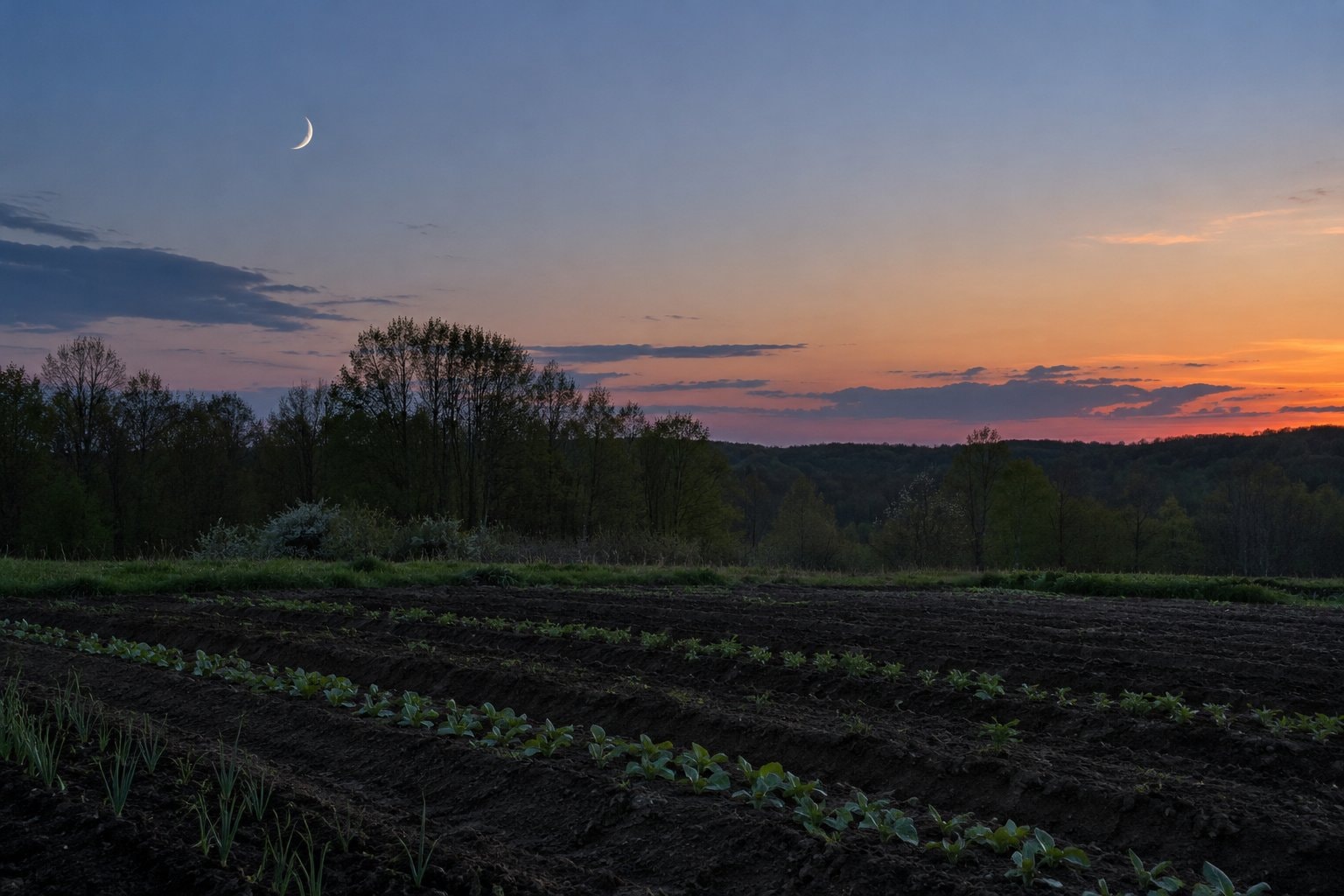
Planting by the signs is a system of garden folklore that turns a celestial calendar into customary rules for work. The Moon’s phase is part of the system, and the zodiac adds another layer. Understanding the tradition means describing those layers without adopting their recommendations. A belief can be organized, detailed and familiar while its proposed effects remain unproved.
The phase and the sign are different ideas
NC State Extension’s discussion of gardening by signs describes practitioners combining the lunar phase with the Moon’s apparent position among zodiac constellations. Its account separates a phase-based practice from the fuller astrological system. The same familiar phrase can therefore conceal different rules. Ask which custom is being described before assuming that every gardener using the phrase means exactly the same thing.
University of Arkansas Cooperative Extension describes phase planting as a customary division between above-ground and below-ground crops, associated with waxing and waning respectively. Ohio State University Extension’s Guernsey account describes the same broad division before turning to the signs. These are accounts of what practitioners believe and do. They are not instructions to time planting that way, nor evidence that following the custom improves a crop.
Waxing and waning are astronomical descriptions of the visible sunlit part of the Moon growing and shrinking. They can be understood without astrology. The sky through the year explains the phases, while moon gardening considers the claimed connection between that visible cycle and plant growth. Keeping the observation and the proposed consequence separate makes both subjects clearer.
The zodiac adds customary categories
Wikipedia’s zodiac reference describes the zodiac as a belt of sky along the Sun’s apparent annual path, divided into twelve signs. The signs use the familiar names Aries, Taurus, Gemini, Cancer, Leo, Virgo, Libra, Scorpio, Sagittarius, Capricorn, Aquarius and Pisces. In the planting tradition, those names acquire another set of meanings. A sky classification is made into a classification of supposed agricultural conditions.
NC State Extension records Cancer, Scorpio, Pisces, Taurus, Capricorn and Libra as fruitful signs in the custom it describes. It records Leo, Virgo, Aquarius, Gemini, Aries and Sagittarius as barren. These labels belong to the tradition. Fruitful does not mean that a source has established greater yields under that sign, and barren does not mean that the soil has ceased to support growth. Reading the labels literally would give the custom a scientific standing the account does not supply.
The Ohio State and Arkansas Extension accounts also describe elemental groupings: water and earth are treated as favorable for growth, while air and fire are treated as barren. Their descriptions show how the system becomes more elaborate than a simple bright-Moon or dark-Moon distinction. They also show why describing a set of beliefs should not be confused with validating its mechanism. A more complicated calendar is still a calendar of customary associations.
The Man of Signs belongs to medical history
Wikipedia’s Zodiac Man reference describes a figure associating parts of the body with zodiac names. Such images appeared in medieval calendars and writings concerned with astrology and medicine. The reference describes their use in timing procedures, including bloodletting. This is a historical almanac convention, not a reading of anyone’s health or a basis for medical decisions.
The distinction is especially necessary here because a familiar decorative figure can make an old belief appear harmlessly practical. An explanation can state what the image represented without reproducing a body-part schedule or asking a reader to use it. The historical practice illustrates how celestial categories traveled between different activities. It supplies cultural context for sign planting, rather than a reason to apply the same categories to bodies or gardens.
What the evidence account says
University of Illinois Extension’s lunar-gardening discussion reports an Agronomy review of the proposed effects of lunar gravity and light on plants. The review found no consistent relationship supporting a lunar influence on plant life in that account. It examined the proposed physical explanations rather than treating long use of a custom as proof. The Extension discussion also reports that further research was considered worthwhile.
That leaves an ordinary but useful distinction. A tradition may deserve attention for the way it joins gardening with the calendar. A practical claim about plant growth needs evidence relevant to the plant and the proposed effect. The existence of the Moon’s phases does not establish the fruitful and barren labels. Nor does a successful garden, by itself, show which part of its care caused the result.
For the actual growing conditions considered by garden references, continue to the gardening year. Fishing by the moon considers a related celestial theory with a different body of evidence. Reading the customs together can make their shared appeal understandable while leaving their practical claims open to the tests each would need.