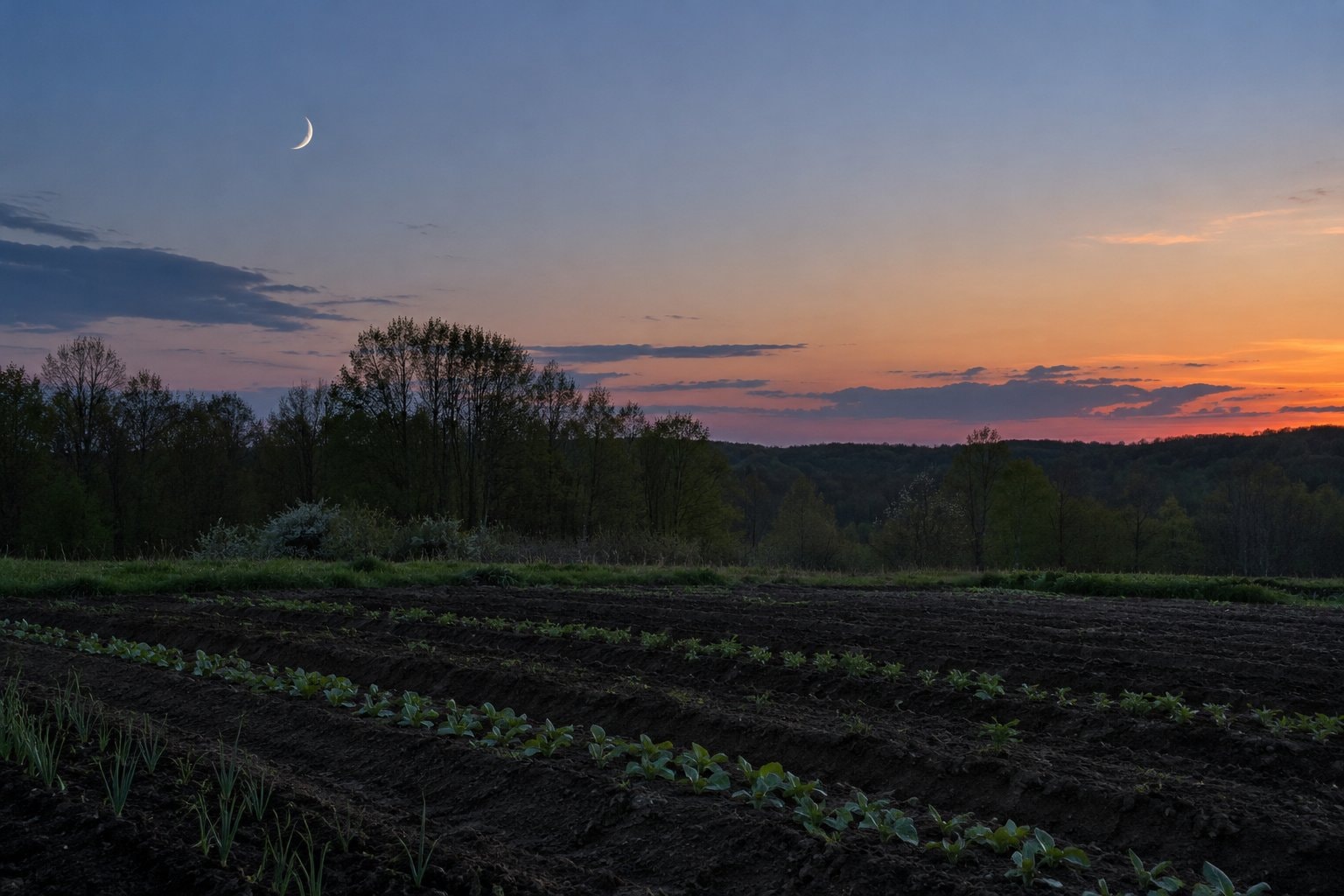
Countryside folklore gives ordinary surroundings another language. An animal may be imagined to speak, a light over wet ground may be given intentions, and a strange object may acquire supposed powers. The useful reading is to identify the tradition, then distinguish its story from an explanation or a practical claim. A story can be worth knowing without being adopted as a fact about the world.
Wikipedia’s American-folklore reference describes a broad field of customs, legends and beliefs. The examples here belong to that kind of reading. They are not a map of places to investigate or instructions to try. A familiar setting makes a tale vivid, but familiarity does not establish its explanation. Each subject needs its own boundary between the recorded belief and what the evidence can say.
The animals are given a voice
Wikipedia’s Christmas Eve account records a Lithuanian tradition that animals could talk on that night. That is the belief the reference describes, rather than an observation of animal speech. It places an extraordinary possibility inside a familiar seasonal occasion. The interest lies in the custom and the way a special night is imagined, not in a claim that a barn or a woodland becomes a place of human conversation.
The story does not need a named household, a reported incident or an invented conversation to be understandable. Its central image is enough: the ordinary boundary between human speech and animal life is briefly removed in belief. Reading it as folklore keeps the imaginative subject intact while leaving the animals themselves to natural history. Their actual behavior belongs in the wildlife features, where the accounts are grounded differently.
Lights over wet ground
Wikipedia’s will-o’-the-wisp reference describes a night-light tradition associated with bogs, swamps and marshes. In the stories, a flickering light may be assigned a guiding or misleading role. The reference discusses both the folkloric interpretations and proposed natural explanations involving light from biological or chemical processes. Those are distinct kinds of account: a narrative about intention and an explanation of a visible appearance.
Words such as ghost light can make a report sound as though its cause has already been settled. They are names within the tradition, not a conclusion that a light has supernatural agency. The same caution applies to calling a report unexplained. A missing explanation in a story is not proof that no ordinary explanation exists. Describing the belief without embellishment leaves room for the difference.
No particular light site is needed here. Naming a location and repeating an incident would shift the subject from a general tradition to a claim about a place and the people associated with it. The broader reading is more useful: what the tale imagines, what the term means, and which explanations the reference actually discusses. The sky page considers lights overhead with a different and more specific astronomical basis.
Reports called earthquake lights
The earthquake-light reference on Wikipedia describes reported luminous appearances said to be associated with tectonic stress or seismic activity. It discusses proposed explanations involving electrical effects in stressed or fractured materials, alongside alternative explanations such as lightning or power-grid disturbances. The reported association and the proposed mechanisms should be described as such. Neither establishes the cause of every light someone sees before or after an earthquake.
A resemblance between two stories is not evidence that they describe the same process. A marsh-light tradition, a meteor and a report near an earthquake can all involve light while asking different questions. Timing alone also needs care: an event remembered beside another event is not automatically caused by it. This page makes no local light claim and offers no prediction based on such reports.
A stone with a history of belief
Wikipedia’s bezoar reference describes masses found in the digestive system and the historical belief that a bezoar could serve as an antidote to poison. The supposed power belongs to the history of belief. It is not a remedy, an instruction or a reason to delay medical care. An object can have a long cultural story without possessing the effects assigned to it.
The distinction is especially important when folklore crosses into health. A historical account can explain that people once trusted an object without asking a reader to trust it. This is a subject for cultural history, not a practice to repeat. No preparation, use or testing of a folk object is part of the account.
Animal exposure needs prompt care
Rabies is a medical emergency; a bite or scratch from an animal that could carry it calls for prompt medical care. MedlinePlus’s rabies information explains the urgent possible-exposure context: it calls for care right away after a bite and notes that the disease is usually fatal once symptoms begin. Folklore has no role in deciding to wait after a possible exposure.
MedlinePlus’s animal-bite guidance advises against petting, handling or feeding unfamiliar animals. It explains that wild animals may attack when threatened, ill or protecting young or territory. Keeping distance is therefore part of sensible observation, not a sign that the animal needs a story about mysterious behavior. For another belief-and-evidence comparison, continue to weather lore; for the living subjects themselves, use the wildlife features.