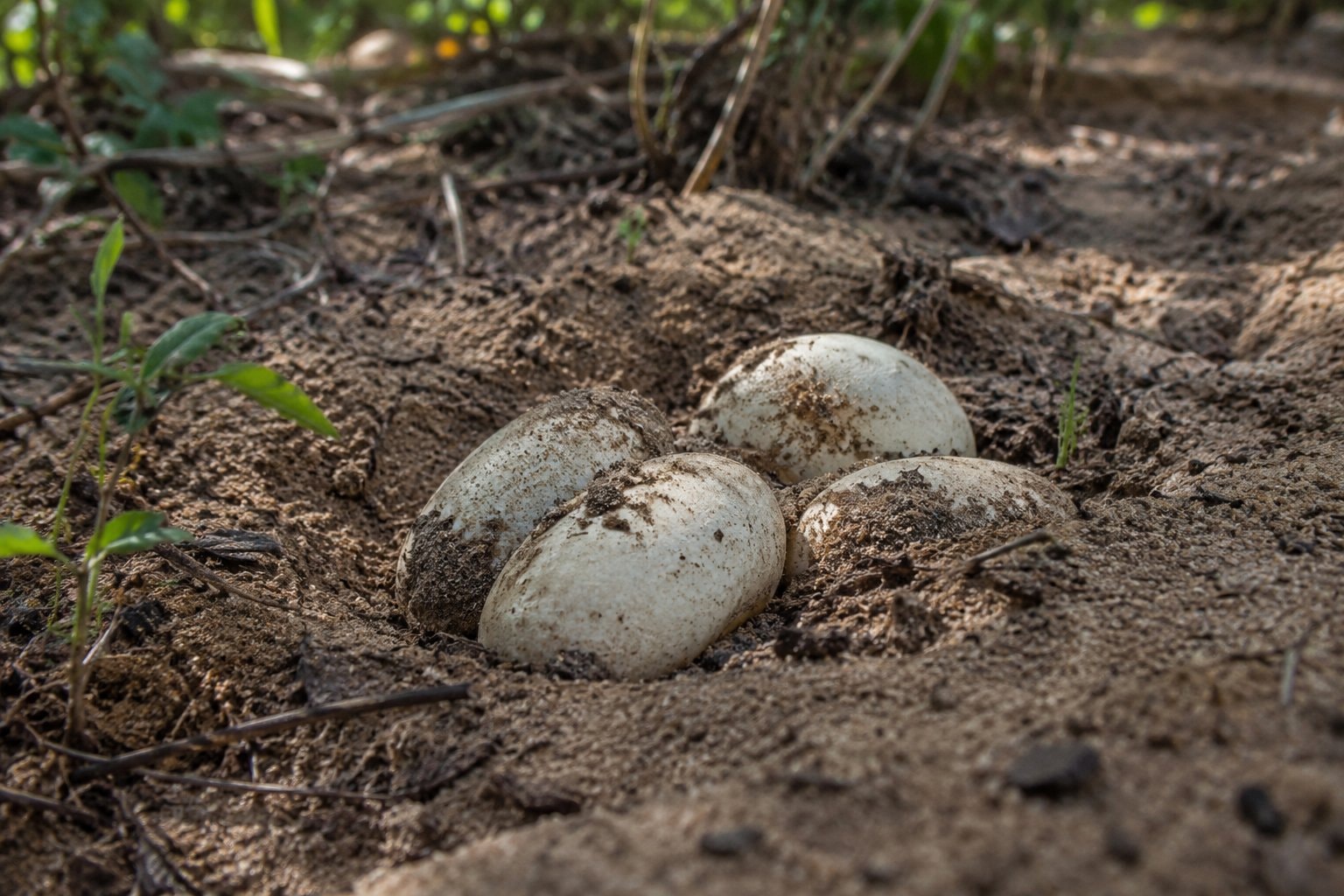
Reptile eggs make a quiet connection between an adult animal and a place. A turtle seen at a pond may have begun life in soil well away from water. A small snake on the forest floor may have hatched beneath sheltered cover, while another kind of snake was born alive. Nesting and early life are varied, and an unfamiliar egg does not come with an obvious label.
Finding a nest is therefore a reason to pause, not to gather it up. Leave wild eggs and hatchlings where they are. The useful question is how the place serves the animal, including its cover, weather and surrounding habitat. A closer look can remain an observation rather than a change in the nest's conditions.
A water turtle lays on land
Wikipedia's common snapping turtle account describes females traveling overland to find sandy nesting soil, often away from the water. After laying, the female covers the eggs. The flexible, leathery shell differs from the brittle impression many people bring from bird eggs. The journey out of a pond is ordinary reproductive behavior, not proof that the turtle needs to be returned to water.
Box turtles also place eggs in loose ground, joining their woodland lives to a buried developmental stage. Adult activity, egg development and the appearance of young do not have to occur at the same moment. Late box-turtle hatchlings may remain in a nest through winter before emerging in spring. The soil can shelter a living stage that a walker's calendar would overlook.
These differences help explain why an empty-looking patch is not necessarily unused. A covered nest can be present without a guarding adult above it. Leave the surface and surrounding shelter alone rather than digging to see what lies beneath.
Not every snake comes from a nest of eggs
The ring-necked snake is an egg-laying example. Its eggs are placed in loose soil beneath rocks or in decaying wood. The common watersnake, by contrast, bears live young. The appearance of a small snake near water does not establish that an egg nest lies nearby.
A hatchling or newborn is an early stage of the same wild animal, not a domestic animal waiting for a keeper. Learning the distinction between egg laying and live birth adds to an observation without requiring a search for nests. The regional snakes page offers a wider comparison of these animals and the need to leave them undisturbed.
Temperature is part of development
For some turtles and other reptiles, the temperature experienced during egg development influences whether the offspring are male or female. Wikipedia's account of temperature-dependent sex determination describes this environmental route to sex determination and distinguishes it from chromosome-based systems. It is a feature of development, not an invitation to manage a wild clutch.
Species differ in their temperature patterns. In some, cooler and warmer conditions tend to produce different sexes; in others, intermediate conditions differ from the extremes. There is also a temperature-sensitive part of development. The same casual statement about warmth cannot describe every reptile egg throughout its time in the nest.
The natural nest is a particular setting, with soil, shade and weather around it. The lesson is that surroundings matter to the developing animal. Moving eggs into a different setting takes them away from those conditions. Their scientific interest can be appreciated without turning a found nest into a home incubation project.
Small animals in a large food web
Snapping turtle eggs and young face predators that large adults are better equipped to resist. Raccoons, skunks, birds and other animals use the nest or young as food. Box-turtle eggs and young likewise occupy a vulnerable stage. A turtle's hard adult shell does not describe the protection available inside an egg or immediately after hatching.
The snapping turtle account follows life from aquatic adults to overland nesting. The box turtle account places eggs within a different woodland life. Together they show why the nest belongs to a web of relationships rather than to an isolated curiosity.
Observation has a clear boundary
The Illinois Department of Natural Resources does not endorse collecting live specimens and states that collecting is prohibited in state parks and nature preserves. Some wildlife possession also requires permits. The Illinois Administrative Code regulates collecting and keeping native reptiles and amphibians. These rules are another reason to leave wild eggs and hatchlings in place.
A brief record can describe the visible animal or nest surface, the surrounding habitat and the weather, without touching eggs, opening a buried clutch or taking young away. Give a nesting adult room to finish and move on. The animal's continued life in the place where it was found is the meaningful outcome of a careful encounter.